1
Question 1 of 15
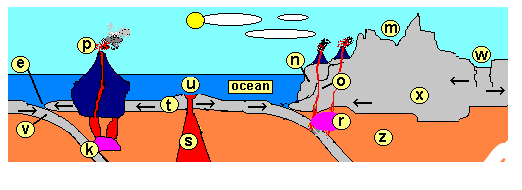
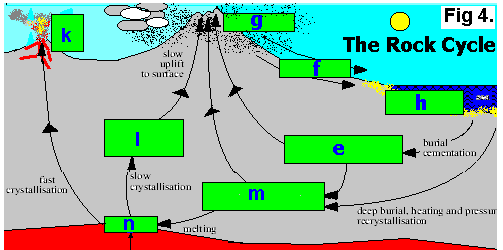
Which part of the diagram is most likely corresponds to a melting and earthquake zone?
This A level Earth science quiz 1 quiz contains 15 multiple choice questions designed to help you revise and test your A level Earth science quizzes knowledge. Select an answer for each question and click “Submit Answer” to see instant feedback. Take your time and try to score as high as possible!
In this quiz, we are going to be looking at Earth science. Here, we will cover some very important concepts such as plate tectonics, types of rocks, the earth’s atmosphere, the origin of fossil fuels, and so on. The study of the earth is very important to humanity and other living things, making this quiz important as well. There are a lot of exciting things to learn as you practice with this quiz.
Earth science is known to be the study of the earth’s structure, properties, processes, and billions of years of biotic evolution. There are 4 main branches of earth science which are: Geology, oceanography, meteorology, and astronomy.
Geology is the study of the earth, its materials, and the various processes acting on them, Oceanography is the study of all aspects of the ocean, Meteorology is mainly the study of the earth’s atmosphere, and lastly, Astronomy deals with the study of everything beyond the earth’s atmosphere.
Taking a look at this quiz reveals its potential already. Do you want to get a good grade in Geography? Practice along with this quiz, and other A level Geography quizzes that are on this platform.
Question 1 of 15
Which part of the diagram is most likely corresponds to a melting and earthquake zone?
Question 2 of 15
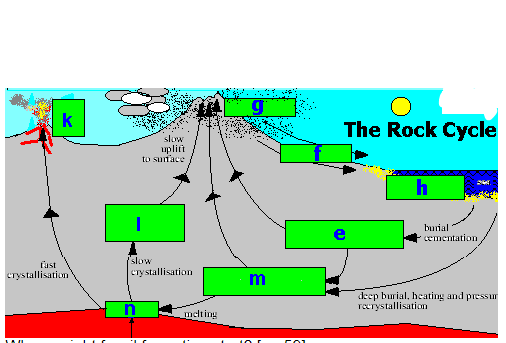
Which of the following is TRUE about plate tectonics and the 'rock cycle'?
Question 3 of 15
Which is a sedimentary rock?
Question 4 of 15
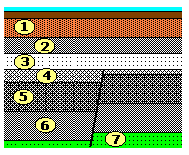
The diagram shows the geology of a section of the Earth's crust. The diagram shows that there has most likely been?
Question 5 of 15
Which was probably TRUE about the Earth's very early atmosphere?
Question 6 of 15
Where might fossil formation start?
Question 7 of 15
Which is TRUE about rock formations?
Question 8 of 15
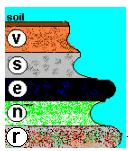
The diagram shows the structure of a cliff face with some details about each layer of rock. (v) composed of orange coloured grains and ripple marks (s) cemented remains of coral and shells of other organisms (e) tiny crystals of hard dense rock, signs of previous melting (n) layers of interlocking crystals with evidence of heating, recrystallisation with no melting (r) hard rock, mixture of larger crystals of different colours.
Which rock layer is most likely to be granite?
Question 9 of 15
Where will limestone form?
Question 10 of 15
Which is TRUE about sedimentary rocks?
Question 11 of 15
In which geographical location are you most likely to find oceanic plate moving away from oceanic plate?
Question 12 of 15
Which is TRUE about 'acidified' water acting on rocks?
Question 13 of 15
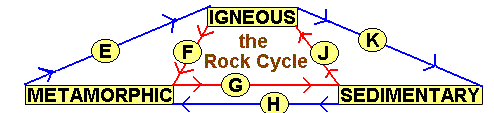
Which sequence best describes process K?
Question 14 of 15
Which is TRUE about glaciers?
Question 15 of 15
Which is TRUE about glaciers?