1
Question 1 of 15
∫cot²x dx equals to
This A level Integration Quiz 1 quiz contains 15 multiple choice questions designed to help you revise and test your A level Integration Quizzes knowledge. Select an answer for each question and click “Submit Answer” to see instant feedback. Take your time and try to score as high as possible!
In this quiz, we shall be studying Integration. Integration is a subsection on calculus and it deals with the calculation of basic integrals, calculation of areas under curves, the calculation of volumes of solids of revolution, etc. It is very useful in mathematics, physics, and the field of engineering. Here, we are going to cover the basics of this topic via questions.
Integration is a mathematical technique used in obtaining a function (say f(x)) of which the derivative of the function (d/dx[f(x)]) is equal to another function (say g(x)). The integration sign is denoted ∫ and the integral of g(x) is written as ∫g(x)dx. The “dx” here means the integration is being done with respect to ‘x’ and it represents an infinitesimal displacement along ‘x’. The solution to this will apparently be f(x). That is, d/dx[f(x)] = g(x), and ∫g(x)dx = f(x). Hence, ∫g(x)dx is the summation of the product of g(x) and f(x). There are some integration problems involving limits. These are most applicable when calculating the area under a curve or the volume of the solid of revolution of a curve.
This topic sounds promising, right? If you are willing to be good in mathematics and physics, all you have to do is go through all the mathematics quizzes available here. Enjoy yourself as you solve problems.
Question 1 of 15
∫cot²x dx equals to
Question 2 of 15
If ∫ sec²(7 – 4x)dx = a tan (7 – 4x) + C, then value of a is
Question 3 of 15
If d/dx f(x) = g(x), then antiderivative of g(x) is ________ .
Question 4 of 15
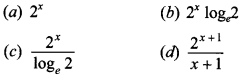
Given ∫ (2^x) dx = f(x) + C, then f(x) is
Question 5 of 15
.
Question 6 of 15
.

Question 7 of 15
.

Question 8 of 15
The value of X for which
Question 9 of 15
.
Question 10 of 15
.
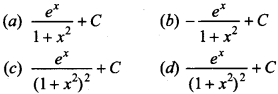
Question 11 of 15
.
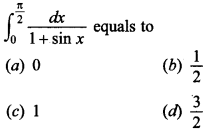
Question 12 of 15
.

Question 13 of 15
.
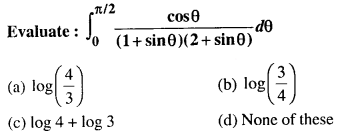
Question 14 of 15
Evaluate: ∫(2tan x – 3cot x)^2 dx
Question 15 of 15
Evaluate: ∫tan(x – θ) tan(x + θ) tan2x dx